My name is Laura. I’m thirty-four years old.
Six months ago, I was diagnosed with cancer. Until that moment, I believed I had everything: a loving husband, a beautiful home, and a marriage strong enough to survive anything.
I was wrong.
At first, my husband, Daniel, accompanied me to every medical appointment. He held my hand and promised that we would fight this battle together.
But as my chemotherapy sessions continued, he became more and more distant.
When my hair began falling out, he stopped looking at me the way he used to.
One morning, as I was getting ready for another hospital appointment, he stood in the doorway holding a suitcase.
“I can’t do this anymore, Laura.”
I thought he was talking about the hospital visits.
“What do you mean?”
“I didn’t marry a sick woman. I want my life back.”
I begged him to stay.
He left without even saying goodbye.
From that day on, I attended every chemotherapy session alone.
I tried to smile at the nurses, even when I felt completely broken inside.
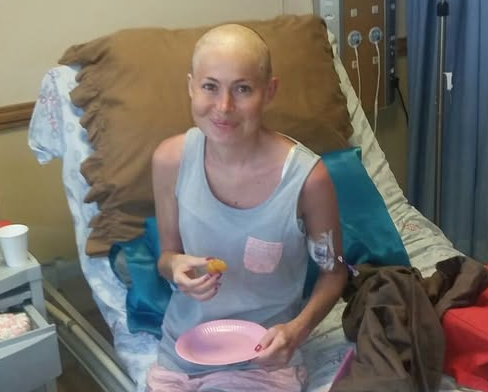
One afternoon, I was sitting on my hospital bed, forcing myself to eat a small piece of fruit, when a nurse named Catherine entered my room.
She seemed unusually nervous.
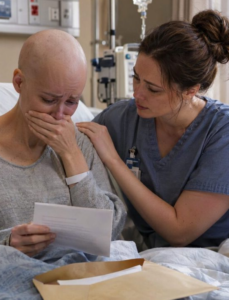
“Laura, there’s something you need to see.”
She handed me a sealed envelope.
“Your husband left this at reception yesterday. He asked us to give it to you after your treatment.”
My heart began racing.
For a moment, I naively hoped it contained an apology.
Instead, I found divorce papers and a letter from the bank.
But there was another document underneath.
When Catherine glanced at it, her face suddenly turned pale.
“Laura… do you know what your husband has done?”
I shook my head.
She immediately closed the door and pulled a chair closer to my bed.
“You need to call a lawyer. Right now.”
The document revealed that Daniel had attempted to transfer ownership of our house by forging my signature.
He had also withdrawn almost all the money from our joint savings account.
But the most painful discovery was hidden in the bank statements.
For months, while I was undergoing chemotherapy, Daniel had been paying for an apartment where he was living with another woman.
He hadn’t simply abandoned me because I was sick.
He had been planning his departure long before he actually left.
I broke down.
“I have nothing left,” I whispered.
Catherine took my hand.
“You still have yourself. And we’re not going to let him take that away from you too.”
She helped me contact a legal aid organization. A lawyer agreed to represent me, and the attempted property transfer was blocked.
Meanwhile, something extraordinary happened.
The nurses organized a small fundraiser to help cover my living expenses. Other patients brought me homemade meals, warm blankets, and handwritten letters.
People who barely knew me showed me more love than the man I’d spent twelve years with.
Eight months later, my oncologist entered the examination room with a smile.
“Laura, your latest imaging scans show no signs of cancer.”
I cried harder than I had on the day Daniel left me.
A few weeks later, he appeared unexpectedly at my door.
His new relationship had failed, and he wanted another chance.
“I made a terrible mistake,” he said.
I looked at him calmly.
“No, Daniel. A mistake is forgetting a wedding anniversary. What you did was a choice.”
Then I closed the door.
Today, I volunteer at the same hospital where I received my treatment, sitting beside patients who have no one to hold their hand.
I never want another person to feel as alone as I once did.
Because sometimes the people who promise to love us forever disappear when life becomes difficult, while complete strangers remind us what love truly means.
I lost my hair, my marriage, and the future I’d imagined.
But I found something far more precious: the strength to begin again.