My husband told me he was having an affair, and our marriage ended in divorce. For five years, I believed he had left me for another woman. Only when I found him in a hospital bed did I discover that he’d been hiding a completely different truth.
“I’m seeing another woman.”
I still remember staring at Daniel as he sat across from me at the kitchen table.
“Who is she?”
He lowered his eyes.
“It doesn’t matter.”
“How long has this been going on?”
“Long enough.”
Those two words ended our fourteen-year marriage.
The divorce went quickly.
Daniel didn’t fight for the house or most of our savings. He also agreed, with very little objection, to the custody arrangement I’d proposed for our children.
I thought he simply wanted to begin a new life with another woman.
But no other woman ever appeared.
Our children, Emma and Josh, never met his supposed new partner. Friends and acquaintances saw him shopping alone or having dinner by himself in restaurants.
He moved into a small apartment and withdrew into himself so completely that, eventually, the children stopped asking him personal questions.
He attended every birthday and school graduation, but always left before dessert.
I kept telling myself that I was almost glad to know he was still suffering.
Five years later, I received a phone call from the hospital.
“Can you come?” Daniel asked.
“What happened?”
“Please. I need to tell you something.”
He asked me not to call the children just yet.
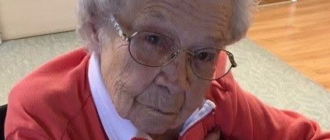
When I entered his hospital room, I barely recognized my former husband.
His cheeks were sunken, and he struggled even to adjust his blanket. One of his forearms was covered in bruises.
“Thank you for coming,” he said.
“What happened?”
“There’s something I should have told you five years ago.”
I sighed.
“Daniel, if this is about our divorce again…”
“I never cheated on you.”
I laughed instinctively, although there was nothing funny about what he’d said.
“You were the one who told me you were sleeping with another woman.”
“I know.”
“You watched me pack your things. You let the children believe you’d destroyed our family.”
Tears rolled down his cheeks.
“I know.”
I stood up from my chair.
“Then why did you lie?”
Daniel tried to sit up. His left arm slipped from the blanket, and he carefully repositioned it with his right hand.
“Because I was sick.”
“What?”
“Five years ago, a neurologist diagnosed me with a progressive disease of the nervous system. It’s called multiple system atrophy.”
I’d never heard of the condition before.
“It gradually affects movement, balance, and bodily functions that normally happen automatically,” he explained. “Blood pressure, bladder function. Over time, it can also cause problems with swallowing and breathing.”
I looked at the medical equipment beside his bed.
“Is that why you’re here?”
“I passed out at home. I fell and couldn’t get back up. A neighbor heard me calling for help.”
I sat down again because my legs felt as though they couldn’t support me.
“Five years,” I whispered. “You knew about this for five whole years?”
He nodded.
“And instead of telling your wife, you announced that you were in love with another woman?”
He turned his face away.
“Your mother had just died.”
My mother had lived with us for three years. During that time, her health had gradually deteriorated.
I managed her medications, helped her bathe, and slept on the sofa because she couldn’t safely be left alone.
Daniel helped whenever he could, but I was the person my mother called at every hour of the day and night.
After her funeral, I’d admitted to him that I felt guilty because I also felt relieved. I could finally sleep through an entire night.
“I remember you saying you wanted your life back,” he said.
“I meant I wanted to go to the movies with you again. I wanted us to spend weekends without constantly looking after Mom.”
“I thought you were finally free.”
“Free from what? Your own husband?”
He turned his head.
“The specialist couldn’t tell me how quickly the disease would progress. I remembered everything you’d been through. I couldn’t ask you to go through all of that again.”
“But you didn’t even ask me!”
“I thought you’d stay with me only out of a sense of duty. That you’d take care of me because you wouldn’t be able to make any other choice.”
“So you decided to do everything possible to make me hate you?”
“I thought you might meet another man. The children would grow up in the home where they’d spent their childhood. You’d have a chance to start a new life.”
“You decided what kind of life would be best for me without even giving me the right to choose!”
“I know I made a mistake.”
“No. You know things didn’t turn out the way you planned. That’s not the same thing.”
For all those years, I’d imagined the woman for whom he’d destroyed our family.
I’d blamed myself for being so exhausted while caring for my mother that I hadn’t noticed how withdrawn he’d become. I’d also blamed myself for letting our marriage turn into an endless cycle of hospital visits, medications, and everyday responsibilities.
And now he was telling me that he’d seen my suffering and convinced himself that lying to me was somehow doing something good for me.
“Did you ever intend to tell me the truth?”
“Not at first. Then I was ashamed. Every year, I told myself too much time had passed.”
I angrily wiped away my tears.
“Emma didn’t even want anyone to mention you at her graduation. Josh refused to stay overnight at your apartment for years. Did you ever think about that?”
“Every day.”
“Then you should have told them the truth.”
He covered his face with his hands.
“I didn’t want them to watch me become helpless.”
“But instead, they spent all those years watching you slowly disappear from their lives.”
He began crying even harder, but I couldn’t bring myself to comfort him.
A nurse entered the room to check his blood pressure.
I went into the hallway and called Anna, my closest friend.
“I need you to tell me I’m not losing my mind,” I said.
She listened as I told her everything from the beginning.
Then she said quietly:
“You have every right to be angry with him, even if he’s dying.”
I hadn’t told her he was dying.
I looked through the glass door at Daniel, who was struggling to drink water from a cup.
“Is he dying?” I whispered.
“I don’t know,” I answered myself.
When I returned, a folder was lying on his bed.
Inside were test results, a list of medications, and a letter from his neurologist.
The diagnosis had indeed been confirmed several years earlier.
Over time, Daniel had developed increasing difficulty walking and maintaining his balance.
Recently, whenever he tried to stand, his blood pressure dropped sharply, frequently causing him to lose consciousness.
His doctor had advised him to stop driving.
He’d missed some follow-up appointments because he had nobody to take him to the hospital.
“Why didn’t you tell Emma or Josh?” I asked.
“I was afraid they’d feel obligated to take care of me. They’d already lost the family they grew up in. I didn’t want them to sacrifice their twenties caring for a sick father.”
“So you preferred that they think you were an unfaithful husband?”
He lowered his head.
“I thought they’d eventually forget. And when I realized how deeply I’d hurt them, I no longer knew how to tell them the truth.”
“Do you even hear what you’re saying?”
“For five years, I tried to spare everyone additional worries,” he replied quietly. “In the end, I caused far more problems than I could ever have imagined.”
I left before dinner.
I didn’t promise him anything.
At home, I opened the drawer containing our old family photographs.
In some pictures, Daniel was teaching Emma to ride a bicycle. In others, Josh was sleeping on his chest. There were also photographs from our beach vacations together.
I found a picture taken a year before our divorce.
Daniel was holding a birthday cake, and I was laughing at something happening outside the frame.
I remembered that evening.
Halfway through washing the dishes, he’d needed to sit down.
I’d joked that he was getting old.
He’d smiled, but for several minutes afterward, he couldn’t stand up.
Had he already been afraid to tell me the truth then?
I called the hospital and asked to speak with his attending physician.
Without Daniel’s permission, she couldn’t share any information, but he gave his consent.
The doctor explained that the disease had progressed considerably.
He had developed serious swallowing difficulties. Recently, he’d suffered aspiration pneumonia after food or liquid entered his airways.
“We’ve reached a stage where further treatment is unlikely to change the course of the disease,” she explained gently. “Our main priority now is to make Daniel as comfortable as possible and relieve his suffering.”
“How much time does he have left?”
“It’s difficult to say exactly, but we’re afraid he may have only days remaining.”
It was unbearable.
I’d only just learned the truth about his illness, and he might have only a few days left to live.
That day, I finally understood how difficult his situation had been.
With Daniel’s permission, I went to his apartment to collect some clothes.
But what I found there left me speechless.
Dirty dishes were piled in the sink.
A stack of unopened mail covered the table.
There was almost nothing in the refrigerator, just yogurt and bread.
Beside the bed stood a walker with adhesive tape wrapped around its handle.
The bathroom smelled of damp towels.
On a chair lay the blue shirt he’d worn to one of Josh’s birthdays.
I remembered how he’d held on to the railing that day and later said he’d twisted his ankle.
A photograph of the four of us was attached to the refrigerator.
I sat on the edge of his bed and burst into tears.
All those years, he’d been suffering alone, only a few miles from me. Meanwhile, I’d lived believing he was enjoying the happy new life he’d chosen for himself.
When I returned to the hospital, I told him what I’d seen.
“You should have asked someone for help.”
“I know.”
“Why didn’t you?”
“I was ashamed.”
I looked at the man with whom I’d once promised to share my entire life.
“You didn’t have to go through all of this alone, Daniel.”
Tears appeared in his eyes.
“I understand that now.”
Later, we spoke with a member of the palliative care team.
Daniel wanted his future care to focus primarily on relieving his suffering. He also wanted to spend his remaining days somewhere quieter than a hospital.
We were told that, if space was available, a hospice could be an appropriate option.
Daniel looked at me.
“Will you visit me?”
I was silent for a moment.
“Yes. I will.”
Then came the moment I’d been dreading most.
Emma was eighteen, and Josh was twenty.
The divorce had left wounds in their hearts that neither of them liked talking about.
That evening, I called the children and asked them to come over as soon as possible.
We couldn’t wait any longer. Their father was dying, and they deserved the chance to see him one more time.
“Did something happen to Dad?” Josh asked when he arrived.
“He’s in the hospital.”
Emma set her bag on the floor.
“Another story to make us feel sorry for him?”
I tried to tell them the truth as gently as I could.
They didn’t interrupt. When I finished, Josh lowered his eyes, and Emma folded her arms across her chest.
“So he never had a mistress?” she asked.
“No.”
“And he let us believe otherwise all this time?”
“Yes.”
Josh looked at me.
“How much time does he have?”
“The doctors think it may be only a few days.”
Emma burst into tears.
“I hated him, Mom. I hated him for what he did to you.”
“I know, sweetheart.”
“He let me hate him while he was dying?”
“He thought he was protecting us.”
“That’s not how you protect anyone!”
Josh wiped his eyes.
“Can we visit him?”
“Of course. We’ll go together tomorrow morning.”
The following morning, the three of us went to the hospital.
Daniel was sitting up in bed, but when he saw the children, his expression changed immediately.
“Emma… Josh…”
Emma stopped at the foot of the bed.
“Why didn’t you tell us anything?”
Daniel lowered his eyes.
“I knew that if I told you, you’d want to help. I pictured you missing classes, giving up opportunities, and spending all your free time beside me. I thought that by staying away, I could spare you all of that.”
“So you’d rather we believed you were an unfaithful husband?” Emma asked.
His eyes filled with tears.
“I thought you’d forget over time. Then I was ashamed, and I didn’t know how to tell you the truth anymore.”
Josh shook his head.
“We would have helped you, Dad.”
“I know.”
“You didn’t even give us that chance.”
Daniel began crying.
“I was afraid of becoming a burden to you. I convinced myself that staying away was doing something good for you.”
Emma wiped her tears.
“But it wasn’t good at all.”
“I know. Forgive me. Please.”
For a while, nobody said anything.
Finally, Emma pulled a chair closer to his bed.
“I don’t know if I can forgive you.”
“You don’t have to.”
She reached out and took his hand.
“But I’m here.”
Josh walked around to the other side of the bed and placed a hand on his father’s shoulder.
And for the first time in five years, all four of us were together in the same room.
Two days later, Daniel was transferred to a hospice.
By then, he was even weaker.
He could barely sit up without assistance, and conversations quickly exhausted him.
The nurses explained that his condition was deteriorating rapidly.
They did their best to relieve his suffering and keep him as comfortable as possible.
Emma and Josh visited every day.
Sometimes we simply sat beside him in silence.
Other times, we looked through old photographs and told him about events he’d missed.
On Thursday afternoon, Emma brought a photograph of Daniel teaching her to ride a bicycle when she was little.
“Do you remember this?” she asked.
He smiled faintly.
“You fell into the bushes that day.”
Emma laughed through her tears.
“Because you let go of me!”
“You told me to let go.”
“I was only seven!”
For a moment, he laughed too.
Later, when the children went downstairs for coffee, Daniel asked me to stay.
“Do you hate me?” he whispered.
I looked at him.
“For a long time, I did.”
He closed his eyes.
“I can’t blame you.”
“I can’t hate you anymore, Daniel. But it still hurts terribly.”
“I know.”
“If you’d told me everything five years ago, perhaps we’d still be married. Maybe things would have been difficult. But we’d have made the decisions together.”
A tear rolled down his cheek.
“I should have trusted you.”
“Yes. You should have.”
He reached out toward me.
“I can’t give you those years back.”
“No,” I replied quietly. “You can’t.”
I held his hand until he fell asleep.
That evening, a nurse told us Daniel’s condition was worsening and advised us to spend as much time with him as possible.
I called Emma and Josh and asked them to return in the morning.
On Friday, I arrived at the hospice before breakfast. Exactly one week had passed since Daniel had called me from the hospital.
Emma and Josh were already there.
Daniel was sleeping. His breathing was slow and irregular.
The nurse explained that the end might be very close.
We pulled our chairs beside his bed.
Emma held his left hand, and Josh sat next to her.
I sat on Daniel’s right side.
For a while, nobody spoke.
Then Josh took out his phone and played one of the old jazz tunes Daniel used to listen to every Sunday morning during breakfast.
For a moment, Daniel opened his eyes.
“Remember those pancakes, Dad?” Emma whispered.
A faint smile appeared on his face.
“You always wanted chocolate chips in them.”
Emma laughed through her tears.
“Every Sunday!”
Daniel turned his eyes toward me.
“Claire?”
“I’m here.”
His voice was barely audible.
“Will you stay?”
I leaned closer and took his hand.
“Yes, Daniel.”
“Even after everything that happened?”
“Even after everything.”
He gently squeezed my fingers.
“Thank you.”
I brushed the hair away from his forehead.
“You can rest now. We’re all here.”
He slowly closed his eyes.
We sat beside him, listening quietly to the music.
Gradually, his breathing became slower and slower, and the pauses between breaths grew longer.
Finally, he took one last breath.
I was still holding his hand, waiting for the next one.
But it never came.
The nurse approached, examined Daniel, and quietly confirmed that he had died.
Emma burst into tears against Josh’s shoulder.
I leaned over Daniel and kissed his forehead.
“Goodbye,” I whispered.
Then I gently adjusted the blanket over his hand and remained beside him while our children cried.
Daniel was buried four days later.
Emma and Josh stood beside me as the coffin was lowered into the ground.
I hadn’t expected to cry so much, but when Josh placed a photograph of the four of us beside the flowers, I could no longer hold back my tears.
After the funeral, we returned to my house.
For the first time in five years, the three of us talked about Daniel, and our memories were no longer made up entirely of anger and sadness.
We remembered his terrible jokes, the Sunday pancakes, and how he always sang off-key in the car.
That evening, after the children had gone home, I placed our old family photograph on the mantelpiece.
I stood in front of it for a long time, studying the faces of the people we used to be.
Then I whispered softly:
“How I wish you’d simply told me the truth back then…”