
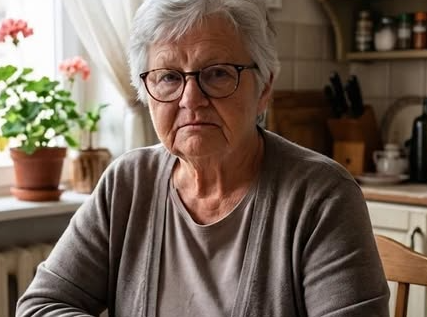
At three in the morning, I was walking barefoot through my own living room, trying not to wake anyone. Children’s toys were scattered across the floor, my daughter-in-law’s slippers lay beside the sofa, and my grandchildren were sleeping in the middle of the room. By then, I knew every obstacle by heart and could have found my way to the kitchen even with my eyes closed.
In the kitchen, between the refrigerator and the radiator, stood a folding camp bed. For six weeks, it had been my only bed.
I was about to pour myself a glass of water when I noticed an open envelope on the table. It bore the logo of a property development company. Several stamped documents were sticking out of it.
I had no intention of reading someone else’s papers. But when I saw my son’s name on the first page, I stopped.
It was an amendment to the purchase agreement for a new apartment.
I began reading.
At first, I couldn’t understand what I was looking at. Then I read the whole thing again, slowly, line by line.
The new apartment was scheduled to be handed over on June 30.
Yet the amendment had been signed on September 18.
I sat down on the folding bed. Someone stirred in the next room, but I didn’t even lift my head.
September eighteenth…
A month earlier, my son Mark had come to see me with a cake, kissed my cheek, and asked for a small favor.
“Mom, we need to stay with you for a little while. Two months at most. The buyer of our apartment wants to move in during December, and apparently the new place won’t be ready until February.”
He spoke so calmly that he might as well have been asking to borrow an umbrella.
“And where are you going to live with the children?”
“Here. We’ll bring only the essentials. The rest of the furniture will go into storage. You won’t even notice that we’re taking up a little space.”
I looked at him and asked:
“Mark, are you selling the apartment I gave you?”
He shrugged.
“Mom, it’s our apartment now. We have the right to decide what to do with it.”
And legally, he was right.
Two years earlier, I’d been the one to suggest swapping apartments. Mark and his wife, Anna, were expecting their second child. They lived in a cramped studio apartment where their older son practically slept alongside his parents. Meanwhile, I was living alone in a spacious three-room apartment where our entire family had once lived together.
After my husband’s death, the silence in those rooms had become almost unbearable. I thought that by giving the young family the larger apartment, I could help them while saving myself from living in a home that was unnecessarily large for one person.
We made the exchange official. There were no additional payments or special conditions.
Mark received the three rooms he’d grown up in, and I moved into his small apartment.
I remember how he hugged me back then and said:
“Mom, you have no idea how much you’ve helped us. One day the kids will understand what you’ve done for them.”
I wasn’t expecting gratitude. I simply wanted my son to have a good life.
But now, sitting on that folding bed in the middle of the night, I began wondering for the first time whether he’d grown too accustomed to my decisions always benefiting him.
I looked at the document again.
Apartment handover date: the end of June.
That meant my son had known perfectly well since September that they wouldn’t be moving into their new home in February. More than that, he knew they might have to wait several additional months.
Yet he’d told me only about February.
The next morning, I waited until Anna left with the children. Mark worked from home, sitting with his laptop balanced on the edge of the windowsill. Our kitchen table had long since become a place for school notebooks, children’s bottles, and other people’s belongings.
I placed the documents in front of him.
“Please explain one thing to me.”
He looked up.
“What’s wrong?”
“Why does this say you’re not getting the apartment until June?”
Mark looked at the papers. His expression changed. He tried to say something, but the words seemed to catch in his throat.
“You knew this back in September?”
“Mom, I can explain everything.”
“Then explain it.”
He closed his laptop and let out a heavy sigh.
“The developer is having problems with paperwork and permits. The deadlines got pushed back. The buyer of our apartment had already taken out a mortgage and didn’t want to wait any longer. If we hadn’t sold the old apartment, we wouldn’t have been able to make the final payment on the new one.”
“So that’s why you decided to move your entire family into my home?”
“Don’t put it like that. We’re not strangers.”
“Of course we’re not. Is that why you decided I didn’t need to know the truth?”
He rubbed a hand over his face.
“I thought things would somehow work out. Maybe the developer would finish earlier. Maybe we’d find somewhere temporary.”
“What about Anna’s parents? They have a large house and an empty bedroom.”
Mark immediately looked away.
That was all I needed to know.
“Did they warn you not to sell your apartment before you had the keys to the new one?”
He remained silent.
“Mark, I asked you a question.”
“Yes. Her father told us many times that we shouldn’t do it. But I didn’t want to hear him say he was right again.”
I slowly pushed the documents aside.
“So you preferred to make me pay for your mistake?”
“Mom, you’ve always helped us. I thought you’d understand.”
“I helped you because I love you. But apparently you’ve decided my love means I don’t have any boundaries.”
He looked at me with irritation.
“You’re the one who suggested the apartment swap. You’re the one who said you wanted to help us.”
“Yes, Mark. And I never regretted it. Until today.”
For the first time in many years, I didn’t see the little boy who needed protecting from every problem. I saw a grown man who knew exactly what he was doing.
And what hurt most wasn’t even the fact that he’d lied to me.
He watched me sleep on a folding bed, try not to disturb his family, and wait for a quiet moment just to use the bathroom. Yet he considered my discomfort perfectly natural.
Because I was his mother.
Because I’d always agreed.
“All right,” I finally said. “You can stay until the end of February. That’s what we agreed. But on March first, you’re moving to Anna’s parents’ house.”
Mark abruptly raised his head.
“Are you serious? I can’t just call her father!”
“Why not? He warned you from the beginning that this would happen.”
“You want me to admit to him that I made a mistake?”
“No. I want you to finally stop pretending that other people are responsible for fixing every mistake you make.”
That same day, I called Anna. Her mother, Elena, answered the phone.
I told her everything without making accusations or trying to portray my son as a bad person.
Elena was silent for a long time before she spoke.
“We really do have a spare room. I didn’t even know the four of you were living in such a small apartment. Why didn’t Mark tell us anything?”
“Probably because your husband warned him from the beginning not to sell the old apartment before receiving the keys to the new one.”
She sighed heavily.
“So my husband was right. But that’s no reason to leave you in a situation like this.”
That evening, I gave Mark one condition: he had to speak to Anna’s parents himself. I wasn’t going to keep solving a grown man’s problems for him.
On Saturday, he went to see them.
He came back late that evening. He was unusually quiet and brought two jars of homemade preserves from Elena.
“Well?” I asked.
“They agreed. Her father said they’ll just have to rearrange some furniture in the room.”
I nodded.
Nobody said, “I told you so.” Perhaps that was why I felt a little relieved.
On February 28, they finally moved out.
My younger grandson hugged me goodbye and promised to visit soon. The older one asked whether he could leave some of his toys at my place.
I smiled and told him of course he could.
When the door closed behind them, I stood in the hallway for several more minutes. An unusual silence filled the apartment. This time, however, it didn’t feel empty. I no longer had to adjust to someone else’s daily routine, tiptoe around the house, or wait until there was enough space for me.
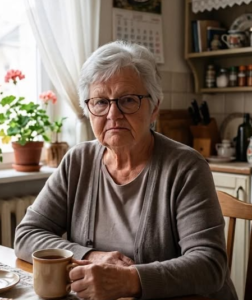
I felt free.
That night, I slept in my own bed. I woke up around three in the morning, instinctively listening for footsteps, children’s breathing, and the creaking of the sofa.
But the apartment was silent.
I got up, went to the kitchen, and stood by the window for a long time with a glass of water in my hand.
The folding bed was still beside the refrigerator. I didn’t put it away immediately. I think I needed time to truly believe that there was room for me here again.
In July, Mark invited me to see their new apartment.
It was spacious and bright, with a small garden. The children’s beds were already in place, the kitchen smelled of fresh wood, and in the large living room, near the window, stood my late husband’s old armchair.
The very same armchair from the apartment I’d once given my son.
It had been kept in storage all that time.
“I asked them to bring it here,” Mark said. “I thought you’d like that. Whenever you visit us, you can sit here.”
I ran my hand along the armrest. There was still a barely visible mark on the fabric from a repair my husband had once made.
“Thank you,” I said softly.
Mark sat down beside me.
“Mom, I wanted to apologize again. I really did the wrong thing.”
I looked at him.
I’d wanted to hear those words much earlier. But now I understood something important: forgiveness doesn’t mean everything has to go back to the way it used to be.
“I don’t want resentment to remain between us,” I said. “You’re my son, and I’ll always love you. But I don’t want you to confuse my love with an obligation to agree to everything.”
Mark lowered his eyes and nodded.
I didn’t lecture him. It was enough to feel that, for the first time in a long while, he’d genuinely heard me.
I could love my son, help him, visit my grandchildren, and invite them to spend weekends with me. But from then on, those things would happen because I wanted them to, not because someone else had already made the decision for me.
On the way home, I thought for a long time about how quietly life changes. Once, I’d given up the larger apartment because I wanted to make life easier for a young family. Later, I’d surrendered my own bedroom, my daily routine, and even the freedom to walk through my own kitchen without obstacles. And throughout it all, I’d kept telling myself that this was what good mothers did.
But love isn’t measured by the number of sacrifices we make. And helping the people we love shouldn’t turn into one person becoming accustomed to taking advantage of another person’s kindness.
At fifty-two, I finally understood: sometimes the hardest thing for a mother isn’t helping her child, but allowing that child to face the consequences of his own decisions.
I had no intention of turning my back on my son, depriving my grandchildren of their grandmother, or turning our family history into an endless argument about who owed whom. I simply didn’t want to keep losing myself for someone else’s convenience.
Now, when Mark calls and asks whether I can help him, I first consider whether it works for me. Only then do I answer. Sometimes I agree, and sometimes I say I can’t. And the world doesn’t fall apart because of it.
I finally put away the folding bed, too. I didn’t throw it out. I simply folded it up and stored it in the closet. It reminded me of the time when I’d nearly stopped feeling like the owner of my own home. But even more, it reminded me of the day I found the courage to say “no” to my son for the first time.
I still love him. It’s just that now there’s room in my life not only for him, his wife, and their children, but for me as well.
And I think that’s the most important lesson I’ve learned over the past two years: we can give our loved ones an apartment, a room, a favorite armchair, or even some of our time. But we must never give them the right to decide how much space we deserve in our own lives.
An apartment may legally belong to a son, but that doesn’t mean his mother must forever settle for a place beside the refrigerator.