
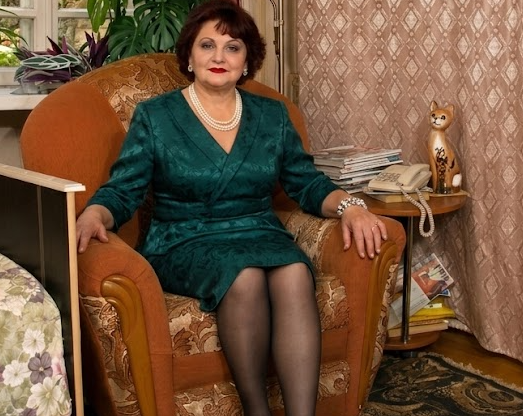
I hated my son’s wife from the very first moment he brought her into our home, although at the time I tried to convince even myself that it was simply “common sense” and “a mother’s intuition.” She stood in front of me, too quiet, too ordinary, wearing a cheap jacket, her eyes constantly dropping toward the floor as though she were already apologizing for the simple fact that she existed. And that was exactly what irritated me most about her.
“Is this her?” I asked my son coldly, not even trying to hide my disappointment.
He nodded. And in that moment, for the first time, I felt that he no longer belonged entirely to me.
She was a simple girl. That was how I immediately defined her in my mind. No particular sparkle, no confidence in her voice, none of that certain “level” I had always imagined beside my son. Every little thing she did only strengthened my resistance: she tried to make herself invisible, spoke quietly, sometimes stumbled over her words, and smiled awkwardly as though she were afraid of saying something wrong.
One evening at dinner, I couldn’t hold myself back any longer and asked sharply:
“Did you ever get a proper education?”
She froze. Slowly, she lowered her eyes. She said nothing.
And at that moment, for the first time in front of me, my son took her hand.
“Don’t talk to her like that,” he said calmly but firmly.
That was when I realized I wasn’t losing him gradually. I was losing him all at once and completely.
With every passing day, I became colder toward her. She, on the other hand, kept trying to be helpful: she cooked, cleaned, brought tea, and quietly asked what needed to be done around the house. But I treated all of it as something expected, never giving her a real chance to “become one of us.”
“Mom… where’s the salt?” she asked cautiously one day in the kitchen.
And that word — “Mom” — exploded inside me.
“I’m not your mother,” I said sharply. “And don’t you dare call me that.”
She didn’t answer. She simply put the spoon down quietly and walked out of the kitchen.
That same evening, my son shouted at me for the first time.
“Do you realize you’re destroying her?”
“I’m only telling the truth,” I replied coldly.
But that night, when I was alone, for the first time I felt that my “truth” sounded empty even to me.
Then everything changed suddenly. Food poisoning, a sharp pain, darkness, the sound of an ambulance siren… I remember almost nothing except the feeling that the world was slipping out from under my feet.
And when I opened my eyes in the hospital, the first person I saw was her.
My daughter-in-law.
She was sitting beside my bed. Exhausted, her eyes red and her hands trembling, but she hadn’t left my side for even a moment.
“You’re awake…” she whispered, immediately calling for the doctor.
Over the next few days, she practically lived at the hospital. I saw her constantly: she brought me warm broth, spoke with the doctors, sat silently beside me when I felt unwell, and simply stayed there, even when I couldn’t say a word.
Then, one night, I woke up and heard her voice in the hallway:
“Please… do everything you can… just help her get better… I know she doesn’t like me… but she’s my family…”
I froze.
The word “family” hit me harder than anything else because I had never thought of her that way. And for the first time, what I felt wasn’t anger.
It was shame.
I closed my eyes so no one would see my tears.
“What if that ‘simple girl,’ as I used to call her, is actually a better person than I am?” I wondered for the first time.

After I left the hospital, I began to see her differently. I saw how exhausted she was, yet she still took care of the house, counted every expense, waited for my son to come home from work, and looked after both him and me without asking for anything in return.
My son had changed beside her too. He had become calmer, more responsible, and more confident. He had a job, stability, and a future.
“She’s a strong woman,” my husband said one day.
I remained silent for a long time.
“Yes… she is strong,” I finally replied.
But the hardest part came later.
By chance, I overheard her talking on the phone in the kitchen.
“Sometimes it hurts… but I understand her… she was simply afraid of losing her son…”
I froze behind the door.
She didn’t hate me.
Not even then.
Not even after everything that had happened.
And that evening, when she quietly asked me again:
“Mom… where’s the salt?”
For the first time, I smiled at her.
“On the table, sweetheart…”
And in that moment, I understood how easy it is to spend an entire lifetime being wrong about people when you look at them not with your heart, but through your own fears.