My mother-in-law offered me $100,000 to give up my baby, but her secret changed everything.
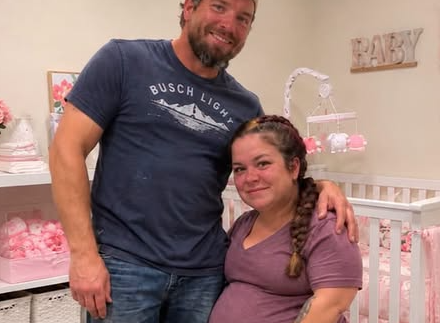
After spending thirty years being mocked because of my short stature, I finally found someone who loved me unconditionally. At 38, I became pregnant with my first child. But when I was seven months pregnant, my mother-in-law, Patricia, offered me $100,000 to leave my baby at the hospital after giving birth.
I refused.
What happened after my daughter was born uncovered a family secret I could never have imagined.
I was born with dwarfism and stand just 3 feet 8 inches tall. Throughout my childhood, I endured years of cruel jokes, humiliation, and rejection. Children called me names, boys joked about the very idea of dating me, and many people assumed I would never be able to have a normal relationship.
By the time I turned 35, I had almost given up hope of finding love.
Then I met Michael.
He was kind, caring, and never treated my height as something strange or unusual. Two years later, we got married. For the first time in my life, I felt genuinely accepted.
His mother, Patricia, was never particularly warm toward me. Whenever Michael brought up having children, she changed the subject. I assumed she was worried about the possible medical risks associated with my condition.
Before trying for a baby, Michael and I consulted several specialists. We understood the potential complications and carefully planned my pregnancy under medical supervision.
When I discovered I was pregnant, we were overjoyed. We decided to name our daughter Charlotte.
But Patricia’s attitude became increasingly hostile. She questioned our decision, made uncomfortable remarks about my pregnancy, and repeatedly suggested that raising a child would be far too difficult for me.
When I was seven months pregnant, she invited me to lunch while Michael was at work. After a little small talk, she placed an envelope on the table.
Inside was a check for $100,000.
She explained very calmly that I should leave Charlotte at the hospital after giving birth. According to her, the baby deserved a better life, and she suggested that she could arrange everything.
I was speechless.
I pushed the check back across the table and told her that Charlotte was my daughter, not something she could buy. I left immediately and told Michael everything.
He was furious. He confronted his mother and made it clear that she would not be welcome in our home or at the hospital.
At 38 weeks pregnant, I gave birth to my daughter by planned C-section. When I heard her first cry, I burst into tears. Charlotte was healthy, beautiful, and finally in my arms.
For the first time, I wasn’t thinking about the years of cruelty I had endured because of my body. I was thinking only about the incredible fact that my body had brought my daughter into the world.
But less than an hour later, everything changed.
A nurse came into my room and told me there was a woman downstairs claiming to be Charlotte’s grandmother.
It was Patricia.
Before I could react, another nurse hurried into the room to check Charlotte’s identification bracelet. The hospital staff had noticed a discrepancy in a transfer document and needed to verify the baby’s identity.
I panicked, but after checking the hospital records and comparing Charlotte’s identification bracelet with mine, they confirmed that everything matched. My daughter was safe.
Meanwhile, Patricia was shouting in the hallway. She was demanding to see her granddaughter.
Michael confronted her outside my room. During their argument, Patricia revealed that she had already prepared a nursery in her own home and told relatives that she expected to raise Charlotte herself.
Then she finally explained why.
Years before Michael was born, Patricia had given birth to a little girl named Anna. That child also had dwarfism. Under pressure from her husband and his family, Patricia had agreed to place Anna for adoption because they were convinced that her disability would make her life difficult.
She had never told Michael that he had a sister.
Patricia admitted that my pregnancy had brought back memories of Anna. Instead of facing the guilt associated with her decision, she had convinced herself that I would eventually make the same choice.
She thought she was protecting Charlotte by taking her away from me.
I felt compassion for the young, frightened woman Patricia had once been, but at the same time, I was deeply angry.
I told her that my disability did not make me incapable of being a mother. I had spent my entire life having to prove that my height did not determine my worth. I would never allow her to make my daughter feel the same way.
Michael was devastated to discover that he had a sister whose existence he had never known about. He confronted his mother and told her that she had absolutely no right to decide our daughter’s future.
Patricia asked if she could see Charlotte, but I refused. Not that day.
Over the following weeks, Michael and I focused entirely on my recovery, caring for our newborn daughter, and adjusting to our new lives as parents. We also began discussing whether it might ever be possible to find Anna.
Two weeks later, Patricia sent a letter of apology. She admitted that offering money and making plans to take Charlotte away had been wrong. She also acknowledged that she had spent decades avoiding the painful truth about her first daughter.
We understood her grief, but forgiveness would take time. Any possible future relationship with Charlotte would depend entirely on whether Patricia could respect our boundaries.
One evening, I sat in Charlotte’s nursery with my daughter in my arms, watching her sleep peacefully.
I thought about the years when I had believed that my short stature made me less deserving of love. I thought about Anna, who might have grown up wondering why her mother had given her away.
And I made my daughter a promise.
She would grow up knowing that being different never made her less valuable, that she never needed to feel ashamed of her body, and that she would always be loved.
Patricia had offered me $100,000 to give up my baby.
But as I held Charlotte close, I knew one thing for certain: there was no amount of money in the world for which I would ever give up my own daughter.